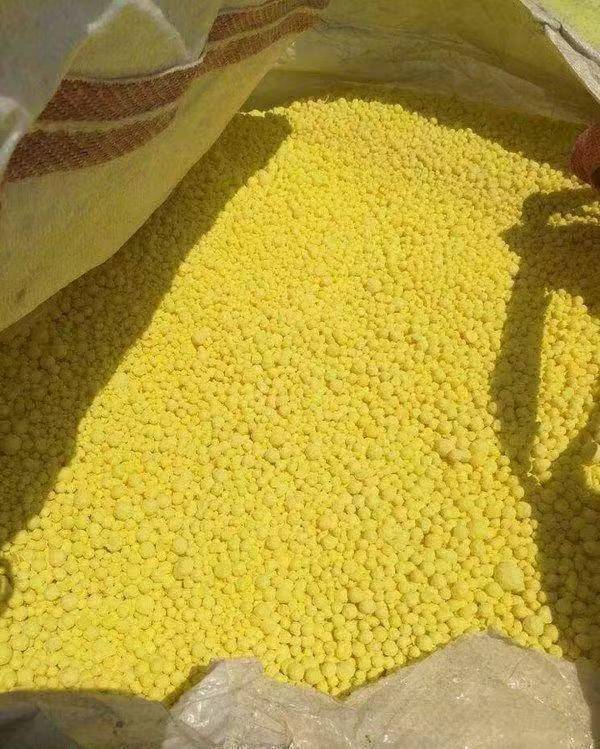
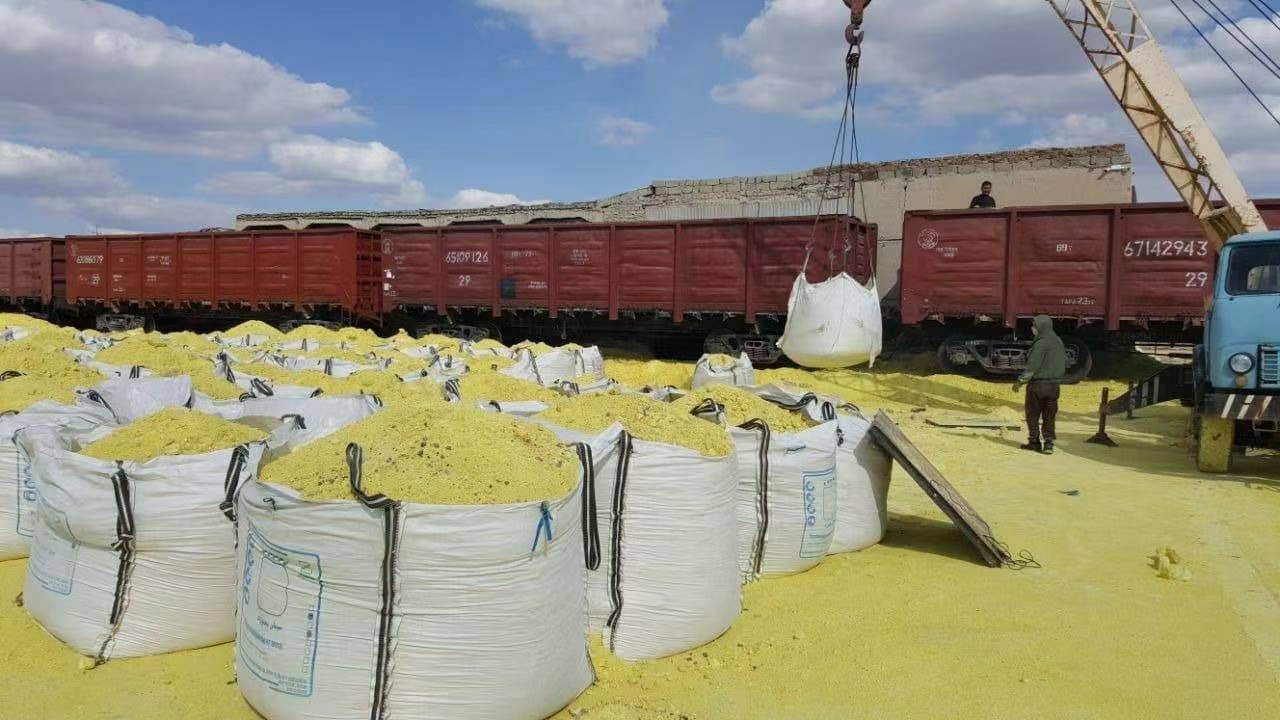
Sulfur Granulate
Key Characteristics & Properties:
-
Appearance: At room temperature, it is a bright yellow, crystalline solid. It is often found in a powdered form or as chunky "roll sulfur."
-
Odor: In its elemental form, it is odorless. However, many sulfur compounds (like hydrogen sulfide, H₂S) have a very strong, characteristic "rotten egg" smell.
-
Allotropes: It exists in several allotropic forms (different structural forms of the same element), the most common being orthorhombic (S₈ rings) and monoclinic sulfur.
-
Melting Point: It melts at a relatively low temperature of 115.21°C (239.38°F) to form a pale yellow, mobile liquid.
-
Combustibility: It burns with a blue flame, producing sulfur dioxide (SO₂), a pungent and important gas.
Major Sources:
-
Native (Elemental) Sulfur: Found in volcanic regions and salt domes.
-
Minerals: Extracted from ores like pyrite (FeS₂) and galena (PbS).
-
Recovery: A major modern source is as a by-product from the desulfurization of natural gas and crude oil, a process required to reduce acid rain.
-
Primary Industrial Uses (The "Four Giants"):
-
Fertilizer Production (The Dominant Use - ~85%):
The vast majority of sulfur is converted to sulfuric acid (H₂SO₄), which is arguably the world's most important industrial chemical. Sulfuric acid is then used to manufacture phosphate fertilizers (e.g., superphosphate). -
Sulfuric Acid (H₂SO₄):
Beyond fertilizers, sulfuric acid is crucial for:-
Chemical Manufacturing: Producing acids, detergents, and plastics.
-
Metal Processing: Pickling and etching steel, leaching copper from ores.
-
Battery Production: As the electrolyte in lead-acid car batteries.
-
-
Rubber Vulcanization:
This is a transformative process discovered by Charles Goodyear. Adding sulfur to natural rubber and heating it creates cross-links between polymer chains. This makes rubber stronger, more elastic, and heat-resistant, enabling the production of tires, hoses, shoe soles, and countless other products. -
Agricultural Uses (Direct Application):
-
Fungicide and Pesticide: Elemental sulfur is a common organic-friendly fungicide used to control mildew and mites on crops like grapes and strawberries.
-
Soil Amendment: It is used to lower soil pH (reduce alkalinity) and to correct sulfur deficiencies in plants.
-